
Why Foundations Matter
The Learning Behind the Schooling
When children go to school, but learning doesn't follow.
A child can spend years in school without gaining the skills they need to read, understand and learn with confidence. In Uganda, this is one of the most pressing — and most hidden — challenges facing education. It stays hidden behind attendance registers, class progression and examination results, until you sit with a child and ask them to read.
I began to understand it more clearly through two children. Their names are changed here, but their experiences have stayed with me.
Maria — eight, going on ten, as she likes to say
I met Maria around a small fish kiosk in rural Uganda, trying to buy fish from her mother in the early evening. My Lusoga is not fluent. My Luganda is not fluent. I was mixing both, and throwing in Swahili when I got stuck. I was avoiding English because her mother had made it clear she does not speak it.
Maria was watching us, amused. Then she stepped in to help — in clear, confident English. I was impressed. We talked. She told me she was in Primary 3 at the local school. Before I finished my purchase, we had agreed she could visit our office library and borrow a book.
She came that same evening. Confident. She chose a Peppa Pig book and flicked through it, telling me she had finished in three minutes. Then another. And another.
When I asked her to pick one and read for me, she sat beside me on the couch and told a story from the pictures — naming characters, inventing what they said. Most of it was inaccurate. Not a single word on the page was read.
I asked her to read a simple three-letter word. Mum. She could not. She could not write or spell her name.
My first thought was COVID-19. Uganda's schools were closed for almost two years — one of the longest closures in the world. But I also found myself asking a harder question: had Maria ever been given the chance to build these foundations securely in the first place?
What stayed with me was not what she could not do. It was what she was doing. She had walked to a library on her own, chosen books, tried to make meaning from pictures. Willingness was not missing. The foundation to move from telling a story to reading one for herself was.
Willingness was not missing. The foundation to move from telling a story to reading one for herself was.

Musoke — Primary Seven, preparing for his final primary exams
A year earlier, in one of our school libraries, I was doing a read-aloud with a P7 class — the candidate class, preparing for their Primary Leaving Examinations. I picked Musoke at random and handed him a short paragraph written for a 6- or 7-year-old. An easy read, on paper.
He struggled through it. When I asked the class what the story meant, most could not explain.
I kept thinking: to pass an exam, on the very bare minimum, you need to be able to read and understand the questions and instructions. If reading itself is a struggle, how do you show what you know?
Musoke had been in school for at least seven years. He had been moved through the grades. But the fundamental reason for going to school — to read, understand and write — was still out of reach.
For Maria, the question was: how do we make sure her outcome is different? That she does not just stay in school, but catches up and excels?
For Musoke, the question was more urgent: is it too late? And what do we do in the time that is left?
The difference between schooling and learning
Maria and Musoke are not exceptions. Their stories reflect a pattern seen across Uganda, and across much of the global south. Researchers call it the learning crisis: the gap between being in school and actually acquiring foundational skills, even while progressing through grades.
In simple terms: schooling is not translating into learning.
The figures are sobering, but they represent children whose experiences are more complex than a percentage can show:
Estimated share of children in Uganda at late-primary age unable to read and understand a short, age-appropriate text, once children out of school are also counted. This is a pre-COVID estimate.
Of Primary Seven pupils in Uwezo Uganda's 2024 household assessment could not read and comprehend a story intended for Primary Two.
Approximate share of Primary Three pupils able to read and comprehend a Primary Two story in both English and a local language.
Approximate share of learners across Primary Three to Seven demonstrating combined competence in Primary Two-level reading and all four basic operations.
These figures refer to different assessments, skills and age or grade groups. They should not be read as directly comparable measures. See the original reports below for definitions and methodology.
Uwezo Uganda's 2024 household assessment found around 23% of Primary Seven pupils could not read and comprehend a story intended for Primary Two — nearly double the 11.3% found in 2021.
National assessments confirm the wider challenge: UNEB's NAPE surveys show only around half of Primary Three learners reaching proficiency in literacy or numeracy, with even lower figures and large gaps at Primary Six, especially in rural and government schools.
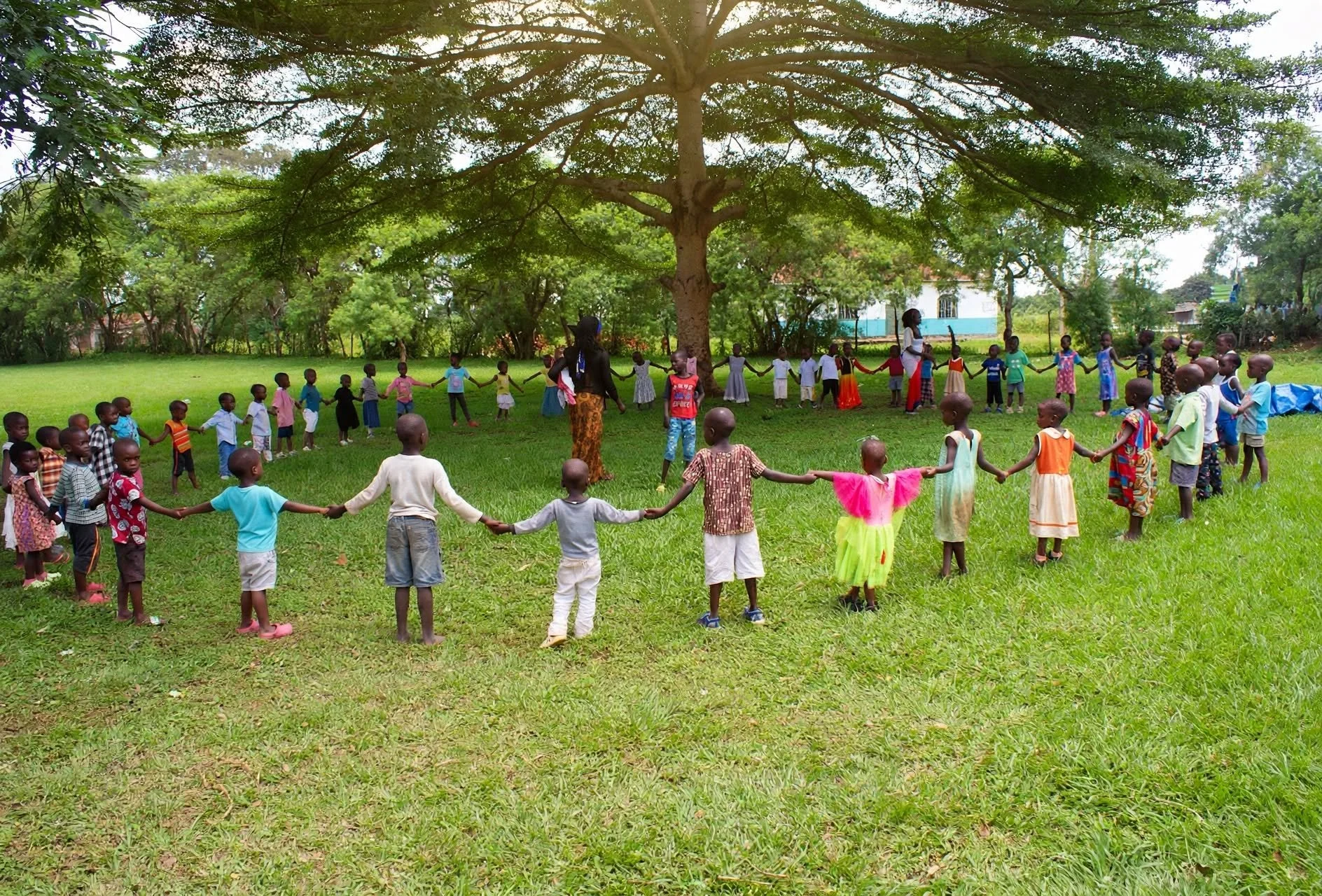
Some children are learning in schools with limited resources. Some have had little access to books or consistent support. Some move through the system without their difficulties being identified early enough. Teacher shortages in rural areas, uneven access to materials and the effects of long school closures all add to it.
The result: children can progress through grades without developing the skills that should underpin everything that comes next. Attendance matters, but attendance alone cannot tell us whether a child is learning.
Being in school is essential. But children also need to leave each stage of education with the skills to take the next step.
Why it matters
When foundations are missed, the effects compound. Children who cannot master basics become demotivated, repeat grades, fall further behind, or leave school altogether. Primary completion in Uganda sits around 55–57%. Inequalities widen — learners in central and urban areas, and those in private schools, perform far better than those in Eastern, Northern and remote rural communities.
Enrolment has risen under Universal Primary Education. Adult literacy has risen. But quality of learning has not kept pace. And the long-term effects are about more than exams — weaker human capital, reduced opportunity, and poverty that repeats across generations.
This is not unique to Uganda. Hundreds of millions of children globally are in school but not learning the fundamentals. Uganda's long closures, automatic promotion without mastery, and resource gaps have made it particularly acute.
Where Tusome comes in — and what we have learned
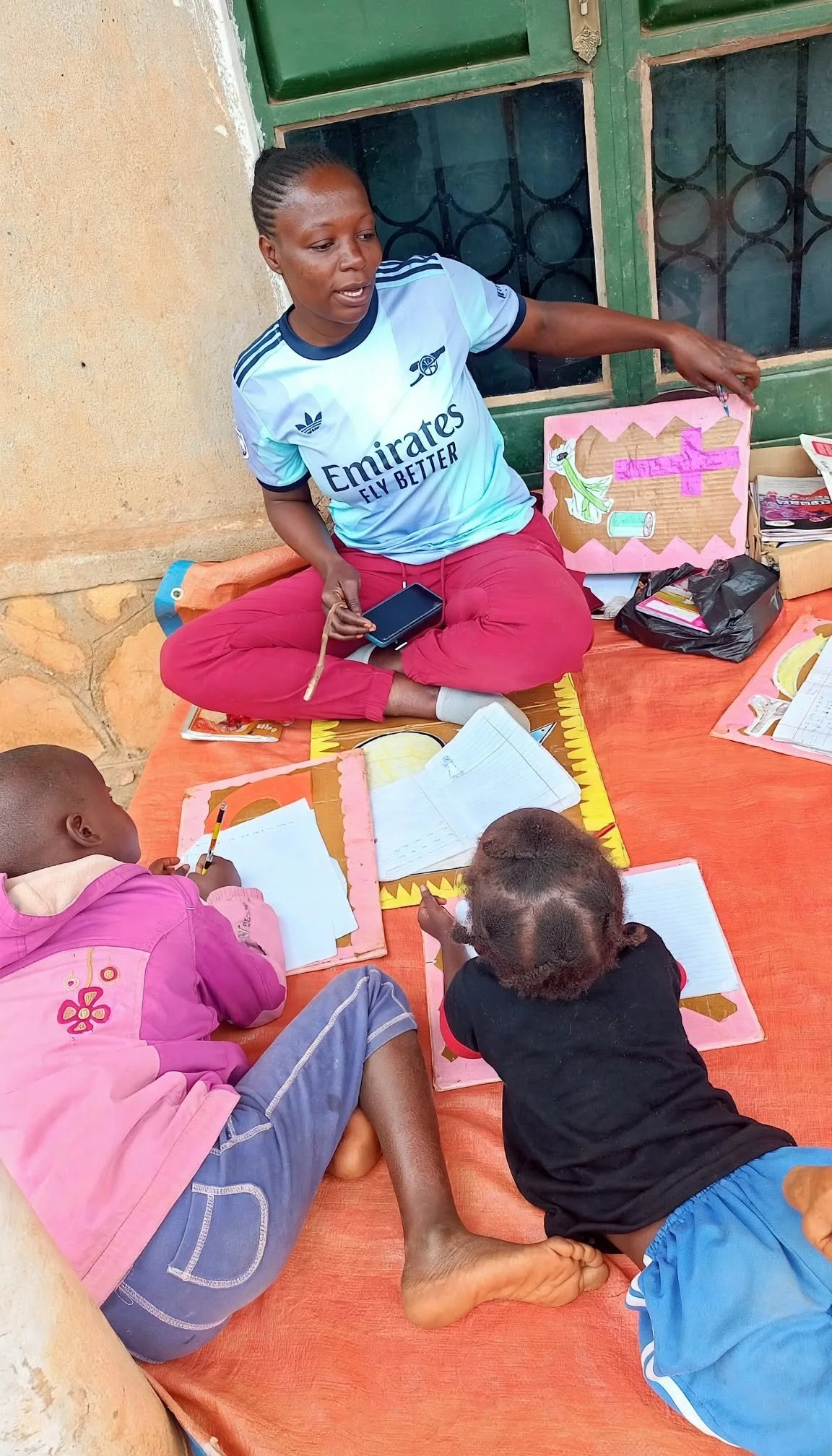
We start with people. We start by listening — to children like Maria and Musoke, to parents, to paraeducators, to teachers and district teams. We try to understand what is happening for children and where the gaps are.
We have learned by doing. Since 2017, our programmes have changed because we listened. In early childhood education, we learned that keeping fees low did not make it accessible. That community spaces created access but needed ownership to last. That connecting centres to public primary schools offered greater continuity. That supporting the educator mattered as much as improving the space.
We work with what is already there. An empty room can become a reading space. A woman who already knows families can become a skilled educator. Information teachers already collect can be used differently when it helps them decide what to do next.
That is why our work brings together three connected areas — not as separate projects, but as different parts of the same learning journey:
Early Childhood Education
To give children like Maria a stronger start, close to home, before gaps become harder to close.
Libraries and Foundational Skills
To give children books they can understand, places to read, and adults who encourage practice, so reading becomes something they choose, not just something they are asked to do.
Assessment and Learning Data
To help teachers and schools see where children are, not just that they are in class. The point of knowing is to do something with what you know.
What we want to change
Our goal is simple to say and harder to do:
- To ensure children excel when they are at school, not just attend.
- To ensure fewer children drop out because they have fallen behind without support.
- To reduce the differences in learning linked to wealth, location, gender and disability.
Whatever we can do to improve the quality of education and the schooling experience, we will do it at the foundational level — to strengthen foundations enough to cushion against shocks upstream.
Tusome means "let us read" or "let us learn" in Swahili and in several Ugandan languages. That is our goal.
Let the children learn — and let the learning follow them through school.